Construction Site Accidents: OSHA Violations and Navigating Complex Jobsite Liability
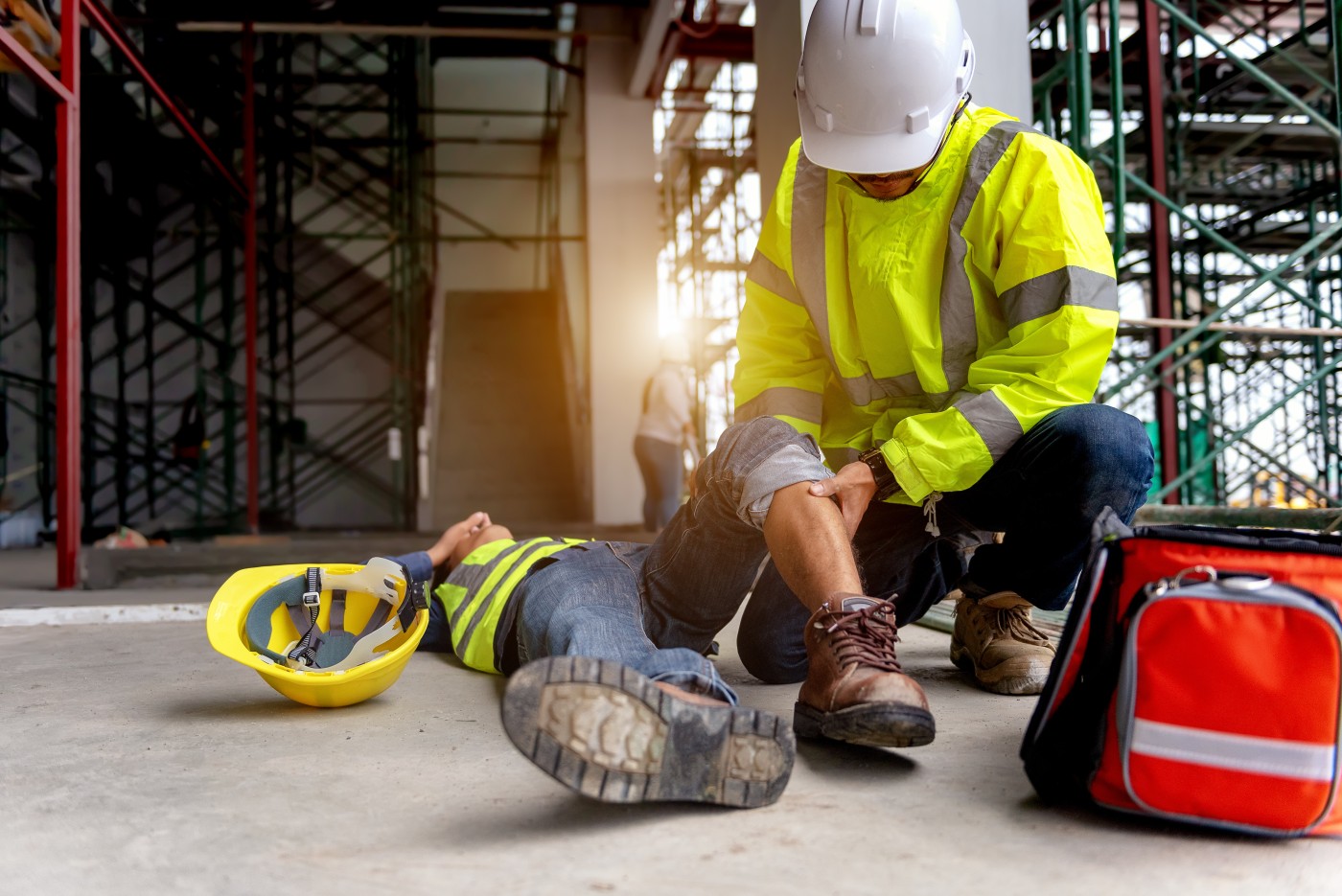
Construction sites are inherently chaotic environments where heavy machinery, high elevations, live electrical currents, and a constant rotation of specialized contractors converge on a single piece of land. Despite rigorous safety standards and mandatory training protocols, the construction industry consistently ranks among the most dangerous sectors for workers. When a catastrophic accident occurs, the immediate focus is rightfully on medical care and site securement. However, the dust barely settles before a highly complex legal reality sets in. Determining exactly who is at fault for a jobsite injury is rarely a straightforward process, largely due to the overlapping layers of contractors, site owners, and equipment manufacturers involved in any given project.
At the center of this legal web sits the Occupational Safety and Health Administration, whose regulations serve as the baseline for jobsite safety. Understanding how OSHA violations intersect with state liability laws is essential for injured workers seeking fair recovery, as well as for contractors striving to protect their businesses from devastating litigation.
The Foundational Role of OSHA in Construction Safety
The Occupational Safety and Health Administration operates under a clear mandate to ensure safe and healthful working conditions for working men and women. For the construction industry, OSHA has established a highly specific set of standards tailored to the unique hazards of the trade. When these standards fail to address a specific, recognized hazard, OSHA relies on the General Duty Clause, which requires employers to provide a workplace free from recognized hazards that are causing or are likely to cause death or serious physical harm.
The Fatal Four
Safety experts and regulators closely monitor a group of hazards known within the industry as the “Fatal Four.” These specific accident types are responsible for the vast majority of fatal injuries on construction sites:
-
Falls: Accounting for roughly a third of all construction fatalities, falls from unprotected edges, scaffolding, and ladders are the leading cause of death in the industry.
-
Struck-by Objects: This includes workers being hit by swinging loads from cranes, falling tools, or heavy equipment moving in reverse.
-
Electrocutions: Exposed wiring, overhead power lines, and unfinished electrical systems present constant dangers to electricians and general laborers alike.
-
Caught-in or Between: These catastrophic accidents happen when workers are crushed by collapsing trenches, caught in the rotating parts of machinery, or pinned between a fixed object and heavy equipment.
Classifying OSHA Violations
When an OSHA inspector arrives at a site following a severe accident, their findings carry immense weight. Citations are not issued equally; they are classified based on the severity of the hazard and the employer’s awareness. A Serious Violation occurs when the workplace hazard could cause an accident that would most likely result in death or serious physical harm, unless the employer did not know or could not have known of the violation.
Conversely, a Willful Violation is the most severe category. It indicates that an employer either knowingly failed to comply with a legal requirement or acted with plain indifference to employee safety. If a willful violation results in a worker’s death, the consequences often escalate from administrative fines to criminal prosecution.
Decoding Jobsite Liability: Who is Actually Responsible?
The traditional employer-employee relationship is relatively simple when it comes to workplace injuries. Construction, however, operates on a Multi-Employer Worksite model. A single commercial project might host a general contractor, a dozen specialized subcontractors, independent architects, and the property owner. This fragmented structure creates a labyrinth of shared and shifted liability.
General Contractors and the Controlling Employer
Under OSHA’s multi-employer citation policy, more than one employer may be citable for a hazardous condition that violates an OSHA standard. The General Contractor generally functions as the “controlling employer.” Because the GC has general supervisory authority over the worksite, including the power to correct safety and health violations or require others to correct them, they can be held liable for hazards created by a subcontractor. If a framing subcontractor leaves an elevator shaft unguarded and a plumbing subcontractor falls down it, the general contractor can face citations and civil liability for failing to enforce site-wide fall protection standards.
Subcontractors as Exposing or Creating Employers
Subcontractors are frequently classified as either “creating employers” (those who caused the hazard) or “exposing employers” (those whose own employees were exposed to the hazard). A subcontractor has a non-delegable duty to protect their own workforce. If a subcontractor realizes the general contractor has failed to provide safe scaffolding, that subcontractor cannot simply order their men onto the dangerous structure and later blame the GC. They have a legal obligation to pull their workers from the hazardous area until the violation is remedied.
Property Owners and Developers
The liability of the property owner largely depends on their level of active involvement in the construction process. If an owner simply hires a general contractor and hands over the keys, they are generally shielded from liability for day-to-day site accidents. However, if the property owner retains control over the details of the work, provides specific equipment that fails, or attempts to direct the contractors on how to perform their tasks, they can quickly strip away their legal immunity and expose themselves to massive liability.
Third-Party Liability and Equipment Manufacturers
Not all accidents are the result of human negligence on the site. Construction relies heavily on complex machinery, from tower cranes to specialized power tools. If a worker is injured because a safety guard on a circular saw was defectively designed, or because the hydraulic system on an excavator failed due to a manufacturing flaw, liability pivots away from the contractors. These scenarios give rise to product liability lawsuits against the original manufacturers or distributors of the defective equipment.
Workers’ Compensation vs. Personal Injury Litigation
A critical hurdle in construction accident recovery is the Exclusive Remedy Rule. In almost all US jurisdictions, workers’ compensation is a no-fault system designed to provide medical care and wage replacement to injured workers. In exchange for this guaranteed benefit, workers are generally barred from filing a standard personal injury lawsuit against their direct employer, even if that employer was highly negligent.
However, workers’ compensation benefits are notoriously limited. They do not compensate for pain and suffering, diminished quality of life, or full future earning capacity. Because construction sites involve multiple independent entities, injured workers often turn to third-party claims to achieve full financial recovery.
If a worker is directly employed by an electrical subcontractor but is injured because a masonry subcontractor negligently dropped bricks from three stories up, the injured electrician can collect workers’ compensation from their own employer while simultaneously filing a third-party personal injury lawsuit against the masonry company. Identifying these viable third-party defendants is the cornerstone of construction accident litigation.
The Impact of OSHA Citations on Civil Lawsuits
While OSHA is an administrative agency that issues fines rather than awarding civil damages, its investigations are highly leveraged in personal injury litigation. When a contractor is cited for violating a specific OSHA standard in connection with an accident, plaintiff attorneys use that citation to establish negligence per se.
Under the doctrine of negligence per se, an injured party does not need to prove that the contractor acted unreasonably; they simply need to prove that the contractor violated a safety statute designed to prevent the exact type of harm that occurred. If OSHA determines a trench collapsed because a contractor failed to use a trench box as mandated by federal regulations, the contractor’s negligence is essentially cemented in the civil case. The legal battle then shifts almost entirely to calculating the financial damages owed to the injured worker.
Proactive Mitigation and Navigating the Legal Aftermath
For construction companies, avoiding devastating liability requires moving beyond compliance on paper to actual enforcement on the ground. A comprehensive safety program must include daily site inspections, mandatory hazard recognition training, and a strict disciplinary policy for safety violations. Documenting these efforts is crucial. When an accident inevitably happens despite best efforts, a documented history of safety enforcement can be the difference between a serious citation and a willful, criminal classification.
In the immediate aftermath of a severe site accident, time is the most critical asset. Worksite conditions change rapidly; equipment is moved, weather destroys evidence, and memories fade. Securing the scene before the OSHA inspector arrives, retaining independent forensic engineers to evaluate equipment failures, and establishing legal counsel immediately are vital steps. For injured workers and contractors alike, navigating the intersection of federal safety regulations and state liability laws requires a strategic, aggressive approach to ensure the truth of the accident is accurately uncovered and appropriately assigned.